


 Advertising Disclosure
Engine Oil Additives Comparison - May 2026

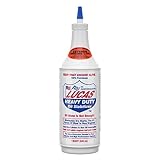

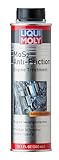

| 1 Best Choice  9.8Exceptional | 2 Best Value 9.6Exceptional | 3  9.5Excellent | 4 9.4Excellent | 5  9.3Excellent | 6 9.2Excellent | 7  9.1Excellent |
| View DealOn Amazon | View DealOn Amazon | View DealOn Amazon | View DealOn Amazon | View DealOn Amazon | View DealOn Amazon | View DealOn Amazon |
ModelLucas Oil 10001 Heavy Duty Oil Stabilizer - 1 Quart | Model Lucas Oil 10001 Heavy Duty Oil Stabilizer - 1 Quart | Model Lucas Oil 10130 Pure Synthetic Oil Stabilizer - 1 Quart | Model Lucas Oil 10130 Pure Synthetic Oil Stabilizer - 1 Quart | Model Liqui Moly MoS2 Anti-Friction Engine Treatment | 300 ml | Oil additive | SKU: 2009 | Model Liqui Moly MoS2 Anti-Friction Engine Treatment | 300 ml | Oil additive | SKU: 2009 | Model Prolube Oil Treatment - Engine Oil Additive for Gas & Diesel Engines - Reduces Wear, Noise, Vibration - Boosts Fuel Economy & Horsepower - Works on Transmissions & Differentials (16oz) |
BrandLucas Oil | Brand Lucas Oil | Brand Lucas Oil | Brand Lucas Oil | Brand Liqui Moly | Brand Liqui Moly | Brand Prolube |
Reviews | Reviews | Reviews  | Reviews | Reviews | Reviews | Reviews |
Features | ||||||
Worth the money 9.8 9.8 | Worth the money 9.8 | Worth the money 9.8 | Worth the money 9.8 | Worth the money 9.8 | Worth the money 9.8 | Worth the money 9.1 |
Distance 9.8 | Distance 9.8 | Distance 9.8 | Distance 9.8 | Distance 9.3 | Distance 9.3 | Distance 8.6 |
Long life 9.8 | Long life 9.8 | Long life 9.8 | Long life 9.8 | Long life 9.3 | Long life 9.3 | Long life 8.6 |
Tech Specs | ||||||
item weight 2.03 pounds | item weight 2.03 pounds | item weight 1.96 pounds | item weight 1.96 pounds | item weight 6.4 ounces | item weight 6.4 ounces | item weight 1.1 pounds |
manufacturer part number 10001 | manufacturer part number 10001 | manufacturer part number LUCA10130 | manufacturer part number LUCA10130 | manufacturer part number 2009 | manufacturer part number 2009 | manufacturer part number PLO-TRT-16OZ |
exterior Smooth | exterior Smooth | exterior Painted | exterior Painted | exterior Chrome | exterior Chrome | exterior - |
model | model | model Lucas Oil 10130 Pure Synthetic Oil Stabilizer - 1 Quart | model Lucas Oil 10130 Pure Synthetic Oil Stabilizer - 1 Quart | model Oil Treatment | model Oil Treatment | model - |
product dimensions 10.12 x 3.14 x 2.67 inches | product dimensions 10.12 x 3.14 x 2.67 inches | product dimensions 9.35 x 2.87 x 2.56 inches | product dimensions 9.35 x 2.87 x 2.56 inches | product dimensions - | product dimensions - | product dimensions - |
oem part number 10001 | oem part number 10001 | oem part number 10130 | oem part number 10130 | oem part number - | oem part number - | oem part number - |
Review | Review | Review | Review | Review - | Review - | Review - |
Available On | Available On | Available On | Available On | Available On  | Available On | Available On |

Our Top 3 Picks
Here are the top 3 recommended products with more information to help you find the right product for you


Engine Oil Additives Buyer's Guide
 Written by Leanna Gil
Introduction
Engine oil additives are products that are added to engine oil to help improve the performance and longevity of an engine. They can help reduce wear and tear on engine components, improve fuel efficiency, and reduce emissions. They also help prevent sludge build-up and protect against rust and corrosion. Engine oil additives can be used in both gasoline and diesel engines, and they come in a variety of formulations to meet the needs of different kinds of engines. When shopping for engine oil additives, it is important to consider the type of engine and the performance characteristics you want the additive to provide. There are a few key features to look for in an engine oil additive, including viscosity improvers, friction modifiers, detergents, and anti-wear agents.
Viscosity Improvers
Viscosity improvers are one of the most important ingredients in engine oil additives. They work by increasing the oil's ability to flow, which helps it better lubricate engine components. This can help to reduce engine wear and tear, improve fuel efficiency, and reduce emissions. Viscosity improvers are especially important in diesel engines, which tend to require more lubrication than gasoline engines.
Friction Modifiers
Friction modifiers are another important type of engine oil additive. They work by reducing the friction between moving parts, which helps to reduce wear and tear on engine components. Friction modifiers are especially useful in high-performance engines, as they can help to improve power and fuel efficiency. They can also help to reduce the wear and tear on engine components, which can help to extend the life of an engine.

Detergents
Detergents are another type of engine oil additive. They work by cleaning the engine and removing sludge, dirt, and other contaminants. This can help to improve engine performance, as well as protect against rust and corrosion. Detergents can also help to reduce emissions, which can help to reduce the environmental impact of an engine.
Anti-Wear Agents
Anti-wear agents are another type of engine oil additive. They work by creating a protective film between moving parts, which helps to reduce wear and tear on engine components. This can help to reduce engine wear and extend the life of an engine. Anti-wear agents are often used in high-performance engines, as they can help to increase power and fuel efficiency.
Conclusion
When shopping for engine oil additives, it is important to consider the type of engine and the performance characteristics you want the additive to provide. Different types of additives offer different benefits, so it is important to do some research to find the best product for your needs. Many engine oil additives are available for both gasoline and diesel engines, so regardless of the type of engine you have, you should be able to find an additive that meets your needs.


Our ranking system
At bestchoice.com, our team curates a selection of top products from a vast array available online, using a sophisticated ranking system based on carefully defined criteria.While traditional hands-on testing has its merits, our use of AI technology offers distinct advantages. AI allows us to process and analyze vast amounts of data from multiple sources, providing a comprehensive view that goes beyond what manual testing can achieve. This approach enables us to deliver insights that are aligned with current trends and consumer preferences, ensuring our reviews are both relevant and up-to-date.
Features
Our AI-driven analysis examines key attributes, capabilities, and other critical factors tailored to each product category. This method allows us to assess effectiveness from various perspectives, ensuring a well-rounded evaluation.
Consumer Reviews
We aggregate and evaluate consumer feedback from across the internet, giving weight to ratings and reviews that reflect the most reliable insights. AI enhances this process by filtering and prioritizing data, offering a balanced view without the need for direct personal endorsements.
Popularity
Our system also considers the popularity of products, analyzing factors such as market presence, reputation, and user satisfaction. By leveraging AI, we capture a comprehensive picture of a product's standing in the market, which may not always be evident through traditional testing.
Value for money
AI allows us to compare products based on attributes like price, specifications, and user feedback, helping to determine their value for money. This data-driven approach offers an efficient and reliable way to assess how products stack up against one another in terms of cost-effectiveness.

