


 Advertising Disclosure
Negative Scanner Comparison - April 2026

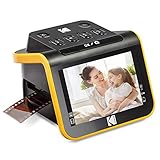
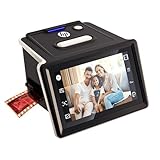
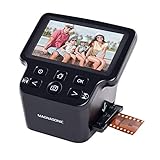
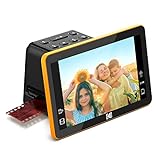

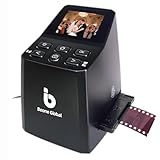
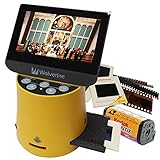
| 1 Best Choice  9.9Exceptional | 2  9.7Exceptional | 3  9.4Excellent | 4  9.3Excellent | 5 Best Value  9.2Excellent | 6  9.1Excellent | 7  8.8Very Good |
| View DealOn Amazon | View DealOn Amazon | View DealOn Amazon | View DealOn Amazon | View DealOn Amazon | View DealOn Amazon | View DealOn Amazon |
ModelKODAK Slide N SCAN Film & Slide Scanner Digitizer with 5” LCD Screen, Quickly Convert Negatives & Slides to Digital 22MP JPEG Photos, Compatible with 135, 126 and 110 Film & Slides | Model HP FilmScan Touch Screen Film & Slide Scanner Digitizer with 5” LCD Screen, Quickly Convert Negatives & Slides to Digital 22MP JPEG Photos, Compatible with 135, 126 and 110 Film & Slides | Model Magnasonic All-in-One 24MP Film Scanner with Large 5" Display & HDMI, Converts 35mm/126/110/Super 8 Film & 135/126/110 Slides into Digital Photos, Built-in Memory (FS71) | Model Kodak Slide N Scan Max Digital Film Slide Scanner, Black/Yellow (RODFS70) | Model BEONEGLOBAL ClearScan S5 Film Scanner High-Resolution Film&Slide Scanner with 5” LCD – Convert 135, 126, 110 Super8 Negatives and Slides to 24MP Digital JPEG Photos Quickly | Model BEONEGLOBAL ClearScan MINI Film Scanner 16MP Slide & Film Scanner, Converts 35mm/135/126 Film & Slides to Digital Photos, Easy-to-Use Film Digitizer,2.31" LCD Screen | Model Wolverine Titan 8-in-1 High Resolution 35mm, 127, 126, 110 and APS Film to Digital Converter with 4.3" Screen and HDMI Output |
BrandKODAK | Brand HP | Brand Magnasonic | Brand KODAK | Brand BEONE GLOBAL | Brand BEONE GLOBAL | Brand Wolverine |
Reviews | Reviews | Reviews  | Reviews | Reviews | Reviews | Reviews  |
Features | ||||||
Worth the money 9.1 9.1 | Worth the money 9.1 | Worth the money 9.1 | Worth the money 8.9 | Worth the money 8.6 | Worth the money 8.6 | Worth the money 8.4 |
Simple to use 9.3 | Simple to use 9.3 | Simple to use 9.3 | Simple to use 9.1 | Simple to use 8.9 | Simple to use 8.6 | Simple to use 9.1 |
Image quality 9.1 | Image quality 9.1 | Image quality 9.3 | Image quality 9.1 | Image quality 8.9 | Image quality 8.6 | Image quality 8.1 |
Tech Specs | ||||||
product dimensions5.27 x 5.35 x 3.74 inches | product dimensions 4.66 x 5.7 x 3.54 inches | product dimensions 5.43 x 4.44 x 4.91 inches | product dimensions 6.69 x 5.35 x 4.45 inches | product dimensions 5.31 x 4.33 x 5.67 inches | product dimensions 3.98 x 3.62 x 4.72 inches | product dimensions 5.5 x 3.5 x 4 inches |
item weight1 pounds | item weight 13.4 ounces | item weight 13.4 ounces | item weight 1.06 pounds | item weight 10.1 ounces | item weight 10.1 ounces | item weight 1 pounds |
Review | Review - | Review | Review - | Review - | Review - | Review |
Available On   | Available On  | Available On | Available On | Available On  | Available On | Available On |

Our Top 3 Picks
Here are the top 3 recommended products with more information to help you find the right product for you 9.9
1KODAK
9.9
1KODAKKODAK Slide N SCAN Film & Slide Scanner Digitizer with 5” LCD Screen, Quickly Convert Negatives & Slides to Digital 22MP JPEG Photos, Compatible with 135, 126 and 110 Film & Slides
9.3 Simple to use9.1 worth the money9.1 Image qualityWhy we love it
 Converts old negatives to digital easily.
Quick and user-friendly scanning process.
Compact design fits any home decor.
Converts old negatives to digital easily.
Quick and user-friendly scanning process.
Compact design fits any home decor.
-
9.7
2HP
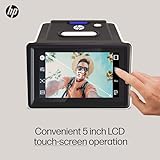
HP FilmScan Touch Screen Film & Slide Scanner Digitizer with 5” LCD Screen, Quickly Convert Negatives & Slides to Digital 22MP JPEG Photos, Compatible with 135, 126 and 110 Film & Slides
9.3 Simple to use9.1 worth the money9.1 Image qualityWhy we love it
Easy slide and negative conversion.
User-friendly touch screen interface.
Includes essential accessories.
-
9.4
3Magnasonic
Magnasonic All-in-One 24MP Film Scanner with Large 5" Display & HDMI, Converts 35mm/126/110/Super 8 Film & 135/126/110 Slides into Digital Photos, Built-in Memory (FS71)
9.3 Simple to use9.3 Image quality9.1 worth the moneyWhy we love it
Fast scanning under 5 seconds.
No computer required for operation.
Handles multiple film formats.




Negative Scanner Buyer's Guide
 Written by Mike Clarke
Introduction to Negative Scanners
Negative scanners are the perfect tools for preserving and printing old photographs and film negatives. They are used to convert these images into digital formats so that they can be stored and shared with others. Negative scanners are available in a variety of shapes and sizes, from handheld devices to desktop scanners. Depending on the type of negative scanner you choose, the quality of the scanned results can vary greatly. When choosing a negative scanner, it is important to consider the resolution, scanning speed, and ease-of-use of the device.
Types of Negative Scanners
Negative scanners come in two basic types: flatbed and film scanners. Flatbed scanners are designed to scan photographs and documents, while film scanners are designed to scan negatives. Flatbed scanners are generally more affordable and can scan a variety of documents and sizes, although the quality of the scanned images will not be as good as with a dedicated film scanner. Film scanners, on the other hand, offer higher resolution and more accurate color reproduction, but can be more expensive.
Resolution
The resolution of a negative scanner is one of the most important considerations when buying one. Resolution is measured in dpi (dots per inch) and the higher the dpi, the more detail and sharpness will be captured in the scanned images. Most negative scanners offer a resolution of between 600 and 3200 dpi. For most scanning needs, a resolution of 600-1200 dpi should be adequate, but higher resolutions will produce better results.

Scanning Speed
Another factor to consider when buying a negative scanner is the scanning speed. This is measured in seconds per frame and indicates how quickly the scanner can process a single frame. Faster scanners will be able to process images more quickly, allowing you to save time when scanning large batches of negatives. Most scanners have a scan speed of between 3 and 10 seconds per frame, although some higher-end models can scan at speeds up to 1 second per frame.
Ease of Use
A negative scanner should be easy to use, so that you can quickly set up the device and start scanning. Look for a scanner that comes with a user-friendly interface and clear instructions. Many scanners also come with software that allows you to adjust the color, brightness, and other settings, so that you can get the best possible results. Some scanners also come with special features, such as dust and scratch removal, which can improve the quality of scanned images.
Conclusion
When buying a negative scanner, it is important to consider the resolution, scanning speed, and ease-of-use of the device. Different types of scanners offer different features, so be sure to evaluate the features that best meet your needs. With the right scanner, you can easily convert your negatives into digital formats and enjoy the convenience of sharing your images with friends and family.


Our ranking system
At bestchoice.com, our team curates a selection of top products from a vast array available online, using a sophisticated ranking system based on carefully defined criteria.While traditional hands-on testing has its merits, our use of AI technology offers distinct advantages. AI allows us to process and analyze vast amounts of data from multiple sources, providing a comprehensive view that goes beyond what manual testing can achieve. This approach enables us to deliver insights that are aligned with current trends and consumer preferences, ensuring our reviews are both relevant and up-to-date.
Features
Our AI-driven analysis examines key attributes, capabilities, and other critical factors tailored to each product category. This method allows us to assess effectiveness from various perspectives, ensuring a well-rounded evaluation.
Consumer Reviews
We aggregate and evaluate consumer feedback from across the internet, giving weight to ratings and reviews that reflect the most reliable insights. AI enhances this process by filtering and prioritizing data, offering a balanced view without the need for direct personal endorsements.
Popularity
Our system also considers the popularity of products, analyzing factors such as market presence, reputation, and user satisfaction. By leveraging AI, we capture a comprehensive picture of a product's standing in the market, which may not always be evident through traditional testing.
Value for money
AI allows us to compare products based on attributes like price, specifications, and user feedback, helping to determine their value for money. This data-driven approach offers an efficient and reliable way to assess how products stack up against one another in terms of cost-effectiveness.

