


 Advertising Disclosure
Tpms Sensors Comparison - April 2026



| 1 Best Choice  9.9Exceptional | 2  9.8Exceptional | 3  9.5Excellent | 4  9.3Excellent | 5  9.0Excellent |
| View DealOn Amazon | View DealOn Amazon | View DealOn Amazon | View DealOn Amazon | View DealOn Amazon |
ModelCARORAV TPMS Sensor GM, 4-Pack Tire Pressure Monitoring System Sensor Replacement for GM Chevy GMC Cadillac Buick, 315MHz OE Replaces for 13586335 13581558 13598771 13598772 | Model TPMS Sensor,GM 315Mhz Tire Pressure Monitoring Sensor Compatible for Chevy Silverado GMC Cadillac Buick Pontiac Saturn Hummber Saab Replace#13598771 13598772 13586335 13581558 4 Pack | Model Autel TPMS Sensors, MX Sensor, MaxiTPMS Tire Pressure Sensor, 2 in 1(315MHz + 433MHz) Press-in OE-Level Programmed by TS508 TS408 TS508WF TS608 MS906TS ITS600 MS906PRO-TS (Rubber valves) | Model Marsflex TPMS Sensor 42607-33021 Compatible for Toyota Lexus Scion Pontiac, Tire Pressure Monitoring Sensors for Camry Prius Corolla rav4 Scion Yaris Replaces 42607-33011 PMV-107J 315MHz Set of 4 | Model TPMS Sensor,433Mhz Tire Pressure Monitoring Sensor Fit for Chrysler Jeep Dodge Ram Replace# 56029398AB(4-Pack) |
BrandCARORAV | Brand CDWTPS | Brand Autel | Brand Marsflex | Brand RENECTIV |
Reviews | Reviews | Reviews  | Reviews | Reviews |
Features | ||||
Easy installation 8.6 | Easy installation  8.9 8.9 | Easy installation 8.6 | Easy installation 8.6 | Easy installation 9.4 |
Worth the money 7.9 | Worth the money 8.1 | Worth the money 7.9 | Worth the money 8.4 | Worth the money 8.4 |
Precision 8.4 | Precision 8.6 | Precision 8.4 | Precision 8.4 | Precision 8.6 |
Tech Specs | ||||
batteries2 CR2 batteries required. (included) | batteries 4 CR2 batteries required. (included) | batteries - | batteries 1 C batteries required. included | batteries 1 CR2 batteries required. included |
item weight7 ounces | item weight 5.6 ounces | item weight - | item weight 7 ounces | item weight 5 ounces |
manufacturer part numberCAR6196-4 | manufacturer part number 13586335 | manufacturer part number - | manufacturer part number APSP07004A | manufacturer part number 56029398AB |
package dimensions4.17 x 3.58 x 2.48 inches | package dimensions 4.21 x 3.62 x 2.36 inches | package dimensions - | package dimensions - | package dimensions 4.17 x 3.62 x 2.44 inches |
Review- | Review - | Review - | Review | Review - |
Available On | Available On | Available On | Available On | Available On |

Our Top 3 Picks
Here are the top 3 recommended products with more information to help you find the right product for you 9.9
1CARORAV
9.9
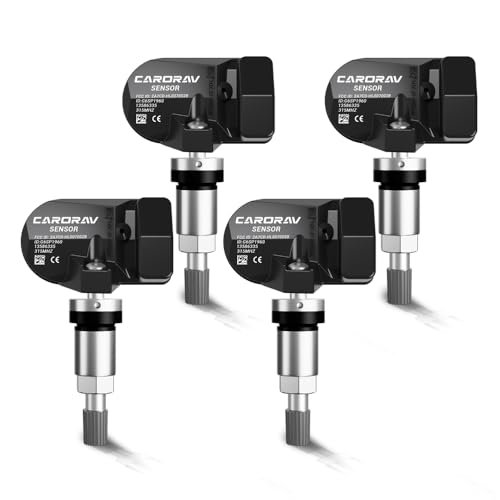
1CARORAVCARORAV TPMS Sensor GM, 4-Pack Tire Pressure Monitoring System Sensor Replacement for GM Chevy GMC Cadillac Buick, 315MHz OE Replaces for 13586335 13581558 13598771 13598772
8.6 Easy installation8.4 Precision7.9 worth the moneyWhy we love it
 Accurate monitoring of tire condition
Pre programmed and tested installation
Monthly loading inspections and updates
Accurate monitoring of tire condition
Pre programmed and tested installation
Monthly loading inspections and updates
-
9.8
2CDWTPS
TPMS Sensor,GM 315Mhz Tire Pressure Monitoring Sensor Compatible for Chevy Silverado GMC Cadillac Buick Pontiac Saturn Hummber Saab Replace#13598771 13598772 13586335 13581558 4 Pack
8.9 Easy installation8.6 Precision8.1 worth the moneyWhy we love it
Long-lasting battery up to 10 years.
Pre-programmed for easy installation.
Reliable and durable construction.
-
9.5
3Autel
Autel TPMS Sensors, MX Sensor, MaxiTPMS Tire Pressure Sensor, 2 in 1(315MHz + 433MHz) Press-in OE-Level Programmed by TS508 TS408 TS508WF TS608 MS906TS ITS600 MS906PRO-TS (Rubber valves)
8.6 Easy installation8.4 Precision7.9 worth the moneyMain highlights- [Superior Battery & Reliability & Lower Sensor Weight] With the highest quality materials and advanced TPMS technology, AUTEL tire pressure sensor provides superior battery life and reliability, to match OE sensor battery performance. The 1-Sensor body weighs only 11g, making it lighter than most sensors in the market, which ensures better sensor stability and performance. NOTE: If you have any other question about Autel MX sensor, please feel free to contact mobobaohe@163. Com.
- [SAE Tested & Certified & Strict Quality Control] AUTEL high-quality MX-Sensor is tested and certified to meet SAE industry standard J1205 / J1206 testing. AUTEL TPMS Sensors are free from manufacturing defects for a period of 24 months or 24,000 miles, whichever option comes first. Each Autel MX-Sensor has a series number for assuring quality control. The series number is imprinted on the sensor or can be read with Autel TPMS tools.
- [SAE Tested & Certified & Strict Quality Control] AUTEL high-quality MX-Sensor is tested and certified to meet SAE industry standard J1205 / J1206 testing. AUTEL TPMS Sensors are free from manufacturing defects for a period of 24 months or 24,000 miles, whichever option comes first. Each Autel MX-Sensor has a series number for assuring quality control. The series number is imprinted on the sensor or can be read with Autel TPMS tools.
- [SAE Tested & Certified & Strict Quality Control] AUTEL high-quality MX-Sensor is tested and certified to meet SAE industry standard J1205 / J1206 testing. AUTEL TPMS Sensors are free from manufacturing defects for a period of 24 months or 24,000 miles, whichever option comes first. Each Autel MX-Sensor has a series number for assuring quality control. The series number is imprinted on the sensor or can be read with Autel TPMS tools.
- [Maximum Signal Strength & Wireless Programming] The extraordinary sensor signal strength allows AUTEL 1-Sensor to be easily programmed wirelessly even when the sensors have already been mounted to the wheel. And with strong signal strength, batch program up to 20 MX-Sensors with AUTEL latest TPMS tools. AUTEL MX-Sensor is 100% clone-able. No relearn is required when the MX-Sensor is cloned with the original sensor ID and put in the same position.
- [IMPORTANT] Please see clearly and choose "Autel Exclusive", and you'll get after-sales support from offcial Autel US directly if you met any trouble when you use our products. [Autel Programmable Universal TPMS Sensor] An easy-to-use and cost-effective necessity for any shop performing TPMS repairs, the Autel 1-SKU sensor inventory solution with 99% vehicle coverage eliminates the need for distributors to carry the hundreds of sensors to fulfill shop orders. On the shop level, needing only 1-Sensor to service nearly every TPMS equipped vehicle means lower repair cost and higher install efficiency.
- [2 in 1 Dual Frequency, Easy to Install&Replace] Autel TPMS sensors combine both 315MHz + 433MHz frequencies into one TPMS sensor with the highest industry vehicle coverage. Press-in designed rubber/metal MX-Sensors can be quickly replaced without difficulty, to greatly minimize installation time and accurately match with the vehicle tires. NOTE: Autel MX-Sensors can only be programmed by Autel Tool.


Tpms Sensors Buyer's Guide
 Written by Leanna Gil
Introduction to TPMS Sensors
Tire pressure monitoring systems (TPMS) sensors are used to monitor the air pressure in the tires of vehicles. This technology helps to prevent tire blowouts, uneven tire wear, and other issues that can arise from improper tire inflation. TPMS sensors are connected to the vehicle's computer system and can alert drivers to tire pressure changes, so they can take the necessary steps to ensure their tires are properly inflated. When shopping for TPMS sensors, it is important to compare features and decide which type is best suited to your needs. In this guide, we will discuss the different types of TPMS sensors and the features they offer.
Features to Consider
When shopping for TPMS sensors, there are a few features to consider. First, you need to decide whether you want a direct or an indirect system. Direct systems use a sensor installed directly on each wheel of the vehicle, while indirect systems use a single sensor placed in the vehicle's dashboard. Each type has its pros and cons, so it is important to consider your needs when making a decision. Additionally, you should look for a sensor that is compatible with your vehicle and is easy to install and maintain. Some sensors also offer additional features such as alerts when there is a pressure change or real-time tire pressure readings.
Types of TPMS Sensors
There are two main types of TPMS sensors. The first type is a direct TPMS sensor. This type of sensor is installed directly in the tire and is connected to the vehicle's computer system. Direct TPMS sensors offer the most accurate readings and can detect tire pressure changes in real-time. However, they are also more expensive and require more maintenance. The second type is an indirect TPMS sensor. This type of sensor is installed in the vehicle's dashboard and reads tire pressure from one location. It is less expensive and easier to maintain than direct TPMS sensors, but offers less accurate readings.

Pros and Cons of Direct TPMS Sensors
Direct TPMS sensors offer the most accurate readings and can detect tire pressure changes in real-time. They are also more expensive and require more maintenance. Additionally, direct TPMS sensors must be installed on each wheel of the vehicle, which can be time-consuming and difficult. However, direct TPMS sensors offer the most complete and accurate readings, so they are the best choice for those who need the most up-to-date information.
Pros and Cons of Indirect TPMS Sensors
Indirect TPMS sensors are less expensive and easier to maintain than direct TPMS sensors. They are also easier to install, as they only require one sensor to be placed in the vehicle's dashboard. However, they offer less accurate readings than direct TPMS sensors and cannot detect tire pressure changes in real-time. For those who need less accurate readings, an indirect TPMS sensor may be the best choice.
Conclusion
When shopping for TPMS sensors, it is important to consider your needs and compare features. Direct TPMS sensors offer the most accurate readings and can detect tire pressure changes in real-time, but they are more expensive and require more maintenance. Indirect TPMS sensors are less expensive and easier to maintain, but they offer less accurate readings. Ultimately, the type of TPMS sensor you choose should depend on your needs and budget. With the right TPMS sensor, you can ensure your vehicle’s tires are properly inflated and safe to drive.


Our ranking system
At bestchoice.com, our team curates a selection of top products from a vast array available online, using a sophisticated ranking system based on carefully defined criteria.While traditional hands-on testing has its merits, our use of AI technology offers distinct advantages. AI allows us to process and analyze vast amounts of data from multiple sources, providing a comprehensive view that goes beyond what manual testing can achieve. This approach enables us to deliver insights that are aligned with current trends and consumer preferences, ensuring our reviews are both relevant and up-to-date.
Features
Our AI-driven analysis examines key attributes, capabilities, and other critical factors tailored to each product category. This method allows us to assess effectiveness from various perspectives, ensuring a well-rounded evaluation.
Consumer Reviews
We aggregate and evaluate consumer feedback from across the internet, giving weight to ratings and reviews that reflect the most reliable insights. AI enhances this process by filtering and prioritizing data, offering a balanced view without the need for direct personal endorsements.
Popularity
Our system also considers the popularity of products, analyzing factors such as market presence, reputation, and user satisfaction. By leveraging AI, we capture a comprehensive picture of a product's standing in the market, which may not always be evident through traditional testing.
Value for money
AI allows us to compare products based on attributes like price, specifications, and user feedback, helping to determine their value for money. This data-driven approach offers an efficient and reliable way to assess how products stack up against one another in terms of cost-effectiveness.

